- Screen Reader Access
- Skip to : main content / navigation
-
- Text Size
- Home
- Sitemap
- Contact us
- हिंदी




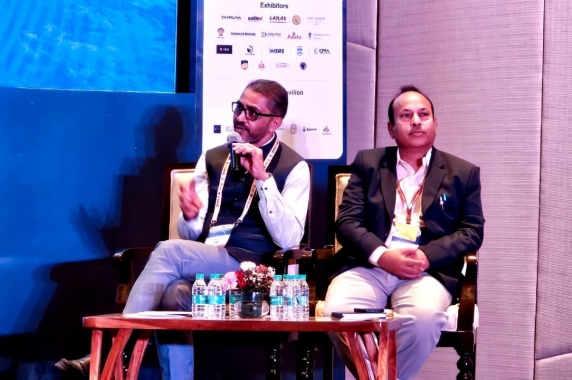
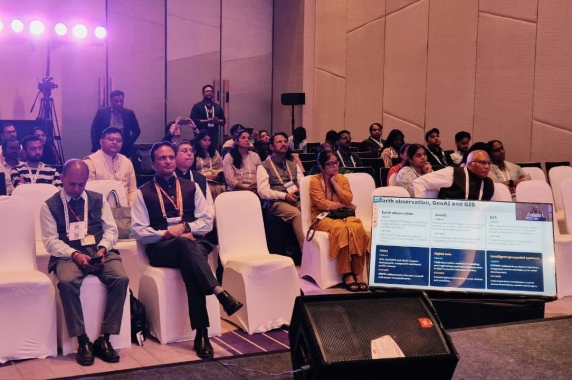
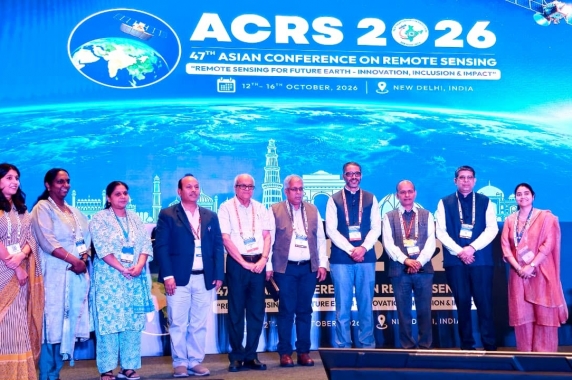
The 47th Asian Conference on Remote Sensing (#ACRS2026), being organised in New Delhi, featured a special session of the Ministry of Earth Sciences (MoES) on 15 October 2026, highlighting India’s scientific and technological capabilities in understanding the Earth system and delivering services for society.
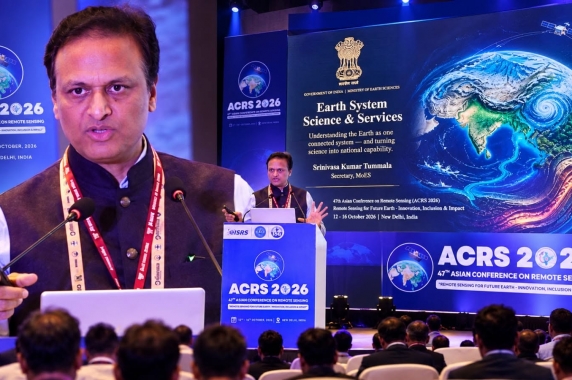
Dr. Srinivasa Kumar Tummala, Secretary, MoES, opened the session with a plenary address titled “Earth System Science and Services for Blue Economy.” He highlighted MoES's major missions and its institutions' mandates, showcasing their contributions to atmospheric and climate science, ocean services, marine technology, polar research, Earth system modelling, and disaster early warning. Key initiatives, including Mission Mausam, Deep Ocean Mission and PRITHVI Vigyan, were also highlighted, emphasising the importance of integrated observations, advanced technologies and scientific research for sustainable development and climate resilience.
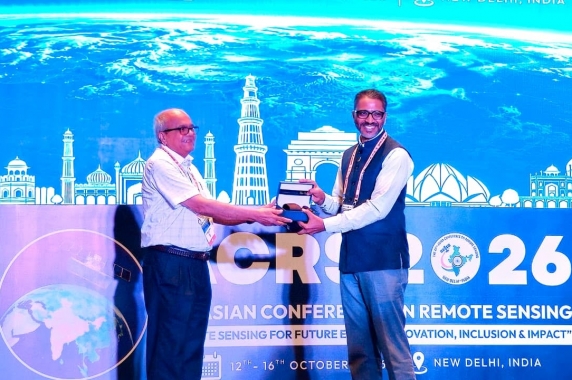
Polar Sciences in Focus: Dr. Thamban Meloth, Director, National Centre for Polar and Ocean Research (NCPOR), delivered an invited talk on Polar Sciences, highlighting India’s scientific contributions and growing presence in the Arctic and Antarctic. He emphasised the significance of polar research in understanding global climate and the interconnected processes linking the polar regions, oceans and atmosphere.
The MoES session was convened by Dr. Srinivasa Kumar Tummala, Secretary, MoES, chaired by Dr. Thamban Meloth, Director, NCPOR, and coordinated by Dr. Jagvir Singh, MoES.
Six presentations showcased the diverse capabilities of MoES institutions across Atmospheric Services, Ocean Services, Ocean Technology, Polar Sciences, Satellite-based Earth System Science, and Climate Models & Scenarios.
The session highlighted the importance of integrating remote sensing, Earth observations, advanced modelling and operational scientific services to address environmental challenges, strengthen disaster preparedness and support informed decision-making.
Through its participation, NCPOR reaffirmed the importance of polar research in advancing Earth system science and enhancing our understanding of global environmental and climatic processes.